E B White's Voice

On Friday Jason Kottke recommended the audio version of Charlotte's Web read by EB White himself. We happened to have a long drive that night and took it for a listen. The audiobook is simply produced without fussy music or sound effects, it's just White reading and it's wonderful.

To get a sense of White's voice, you can check out this Academy award nominated short The Family That Dwelt Apart; it's an adaptation of one of his New Yorker short stories and is also self-narrated.

And since we're on a White kick, fans might also enjoy this 1970's era form letter to his young readers.

Dear Reader:

I receive many letters from children and can't answer them all -- there wouldn't be time enough in a day. That is why I am sending you this printed reply to your letter. I'll try to answer some of the questions that are commonly asked.

Where did I get the idea for Stuart Little and for Charlotte's Web? Well, many years ago I went to bed one night in a railway sleeping car, and during the night I dreamed about a tiny boy who acted rather like a mouse. That's how the story of Stuart Little got started.

As for Charlotte's Web, I like animals and my barn is a very pleasant place to be, at all hours. One day when I was on my way to feed the pig, I began feeling sorry for the pig because, like most pigs, he was doomed to die. This made me sad. So I started thinking of ways to save a pig's life. I had been watching a big grey spider at her work and was impressed by how clever she was at weaving. Gradually I worked the spider into the story that you know, a story of friendship and salvation on a farm. Three years after I started writing it, it was published. (I am not a fast worker, as you can see.)

Sometimes I'm asked how old I was when I started to write, and what made me want to write. I started early -- as soon as I could spell. In fact, I can't remember any time in my life when I wasn't busy writing. I don't know what caused me to do it, or why I enjoyed it, but I think children often find pleasure and satisfaction is trying to set their thoughts down on paper, either in words or in pictures. I was no good at drawing, so I used words instead. As I grew older, I found that writing can be a way of earning a living.

Some of my readers want me to visit their school. Some want me to send a picture, or an autograph, or a book. And some ask questions about my family and my animals and my pets. Much as I'd like to, I can't go visiting. I can't send books, either -- you can find them in a bookstore or a library. Many children assume that a writer owns (or even makes) his own books. This is not true -- books are made by the publisher. If a writer wants a copy, he must buy it. That's why I can't send books. And I do not send autographs -- I leave that to the movie stars. I live most of the year in the country, in New England. From our windows we can look out at the sea and the mountains. I live near my married son and three grandchildren.

Are my stories true, you ask? No, they are imaginary tales, containing fantastic characters and events. In real life, a family doesn't have a child who looks like a mouse; in real life, a spider doesn't spin words in her web. In real life, a swan doesn't blow a trumpet. But real life is only one kind of life -- there is also the life of the imagination. And although my stories are imaginary, I like to think that there is some truth in them, too -- truth about the way people and animals feel and think and act.

Yours sincerely,

E.B. White

My 4 Year Old On What Makes a Good Shoe

1. "They should be fast."
2. "They should have something on them. Something pretty cool like rocket boosters or fire or bush babies or something."
3. "Maybe they should glow in the dark so you can see them when it is night... or you could have a light on them and a remote control."
4. "They should be faster than regular shoes."
5. "When your feet are in them, your legs should be really fast."
6. "They should not make sounds when you walk. I like to scare people."
7. "You have to make sure they are fast shoes. SUPER FAST!"
8. "They should be soft."
9. "They should never smell like feet."
10. "When you run in fast shoes you should always win."

Transcribed January 18, 2011

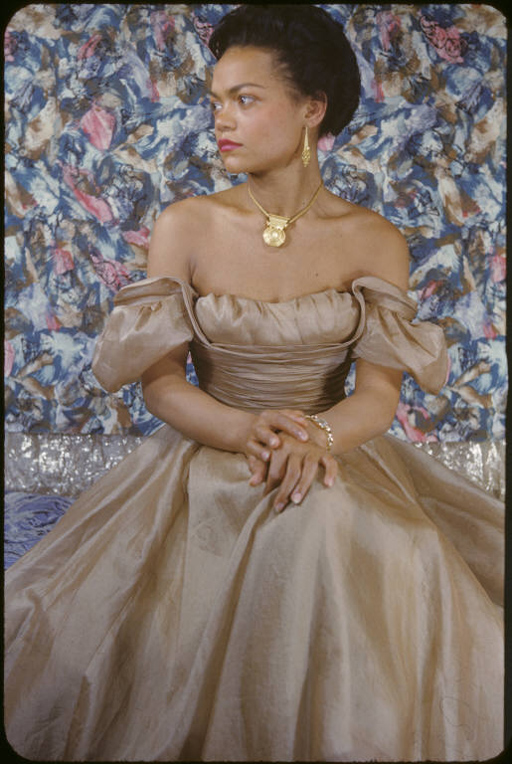
Carl Van Vechten

1093901.jpg

James Earl Jones

file-missing.jpgEartha Kitt

Carl Van Vechten, and Iowan, was a music critic, photographer, and patron of the Harlem Renaissance. He's best known for his studio portraits of artists, writers, actors, and musicians. Yale's Beinecke Library holds a large Van Vechten's kodachrome cache full of unusual images of well known African American performers (this tough and intimate Billie Holiday portrait was new to me). More images from Yale's collection can be found here. (found via It's never summer)

Note: The Library server seems to fail regularly, so browse

Rokuro Taniuchi

Rokuro-Taniuchi-fall.jpg


Rokuro-Taniuchi-snow.jpg

Rokuro-Taniuchi-ascend.jpg

Dear Santa,

This Christmas I would like an exhaustive English language monograph featuring the work of Rokuro Taniuchi.

Thanks in advance!

Raul

. . . . . . . . . . .
Editor's note: Taniuchi was a Japanese artist/illustrator who known for his illustrations in comic books, children's books, and magazines (he painted over 1000 magazine covers.) Five galleries of Rokuro's work can be found on Will Schofield's completely excellent book illustration blog 50 Watts. An overview of Rokuro's work can be found on Amazon Japan.

Also please check out 50 Watt's fantastic book illustration collections on flickr. But beware, they will kill your afternoon.

Livia Corona

Livia-Corona-2million.jpg


I'm a big fan of Mexican photographer Livia Corona. Her most recent project titled "Two Million Homes for Mexico" was just featured on Culturehall. The project name comes from a promise that Mexican president Vincent Fox made in 2000 to build two million homes during his term. The homes were indeed built at a rate of 2500 per day, and now a decade later Corona explores what they've become.

MFK Fisher's Chapter Headings

My wife is a great champion of the food writer and memoirist MKF Fischer and often reads me excerpts. I've become a fan myself as Fischer's writing is spare, modern, dark and amusing.

These are Fischer's chapter headings (always great) from How to Cook a Wolf, a book published in 1942.

3 How to Be Sage Without Hemlock
10 How to Catch the Wolf
14 How to Distribute Your Virtue
26 How to Boil Water
46 How to Greet the Spring
53 How Not to Boil an Egg
66 How to Keep Alive
72 How to Rise Up Like New Bread
80 How to be Cheerful Through Starving
86 How to Make a Pigeon Cry
121 How to Pray for Peace
133 How to Be Content with a Vegetable Love
138 How to Make a Great Show
145 How to Have a Sleek Pelt
151 How to Comfort Sorrow
163 How to Be a Wise Man
167 How to Lure the Wolf

If you don't know Fischer's writing, I recommend this small except from The Gastronomical Me on the moment she discovered food. The passage also happens to be a nice piece on fatherhood.

Continue reading "MFK Fisher's Chapter Headings" →

Bad Habits

bad-habits.jpg


I've always loved the classic Indian educational posters of the Indian Book Depot, Map House. Today I discovered The Indian Book Depot is now online! The site features a fairly comprehensive collection of their classic posters and maps.

You can also find the charts in a beautiful oversized (and now out of print) book called An Ideal Boy.

p.s. How many of you had the Monks 'Bad Habits' start playing in your mind when you saw the title for this post?

Ken Russell

Ken-Russell-Last%20of%20the%20Teddy%20Girls.jpg

The British director Ken Russell died yesterday. I never cared much for the films that gave him notoriety, but always found his photography striking. Like Kubrick he started as a photographer and made many notable images before turning to directing. He aspired to be a fashion photographer, but his documentary images are the ones with real meat. Only a few of this type of image can be found online (I've seen book of his work somewhere, but can't find a link),

A few image galleries: Ken Russell a Retrospective, Images for Sale, Ken Russell's Fabulous 50's.

Related: Kubrick's Photography: Overview, Chicago, New York.

Notes for college interviewees i.e. How to prepare for your college interview.

Pton-winter-002.jpg


I've been interviewing high school kids for college for almost 15 years and am about to start interviewing for next year. Here are a few general notes that might help interviewees. If you've googled your way here, you're on the right track, you're preparing.

Before beginning, be prompt and courteous when setting up a meeting time. Your interviewer is probably a busy person who is making time for you. Be respectful. Set up the interview yourself (i.e. don't rely on your mom). Don't be late.

1. If you're applying to a top school, odds are you're qualified to go there. Most of you, on paper, look pretty similar. You all have good grades and high SATs; you are all active in extracurriculars; many of you do important community work; in short you're all pretty extraordinary. But too many of you are applying for too few spots. Your college interview, like your college application, is a chance to differentiate yourself. What are you passionate about? What moves you? What gets you up in the morning?

2. You're probably better off applying to 3 schools than you are 10. Make each application count. It is much easier to focus on 3 schools than 10. I've had lots of kids start interviews by talking about other interviews and how tired they are of the application process. This is not a good way to start.

3. Learn about your interviewer. We google you. You should google us too. When we know things about each other, it's easier to have a real conversation.

4. I could care less about your grades, that's for the people in admissions to sort through. I want to hear your story. Think about your story. What made you the person you are? How do you edit your life into an hour? What stories define you? Practice telling your story. Practice telling it out loud (you might just learn something about yourself in the process). Record yourself w/ friends interviewing each other. Like anything, the more you practice, the easier the real interview will be.

5. People who are giving college interviews, tend to be people who love their schools and are protective of them. Learn something about the school. Every school has its own culture. How would you fit into that school culture (or disrupt it!). Read the school newspaper. Visit the school if you can. Be prepared for the question, "Why [school name]?"

6. A good interviewer will ask open ended questions that defy easy answers. It's ok to pause and think about your response. Don't be scared of silence.

7. Be honest. Don't try to be something you're not.

8. Ask questions.

9. Slow down. Breath.

10. Follow up.

Thomas Gardiner

I enjoyed going through Yale MFA student Thomas Gardiner's project "New York Is Big But This Is Biggar" documenting small towns in Western Canada. As a Saskatchewanian friend always says, "You know we're the same, but a little different."

thomas-gardiner.jpg


Small Victories

I went out on a walk with my 4 year old Gabriel yesterday. "Where are we going?" he asked as I helped him put on his shoes.

"Nowhere, "we're just walking."

"What do you mean?"

"We're going out to wander. It's a beautiful day."

"But where are we going?" he asked again suspiciously.

"Nowhere. Which way do you want to go?"

He pointed towards the river.

We walked and talked. And we talked and walked. We discussed ducks, Louis Armstrong, the nature of rocks, clouds, snowfall, wind, big brothers, blood, girls, trees and a few other things.

Gabriel directed me to take pictures of him standing on various rocks and benches.

At Brooklyn's Pier 1 park, we spread out on the empty lawn and looked at the blue sky. He ran up the hill, rolled down it. He put grass on my head. More talking. Then, a skinned knee after a second run down the hill ended up in the gravel. No. Big. Deal.

We circled back around by the Brooklyn Bridge and passed a neighborhood playground. "I used to go there when I was little." Gabriel looked through the fence, "We found a bone in there once. Maybe some kid died in there."

He wanted to walk by his school (Empty on a Sunday and deemed creepy. "I thought the teachers lived here... It is very quiet now.")

Soon we were back in familiar territory and then home. The four mile wander was over. He ran through the door to find his brother... they started playing/wrestling immediately. No talk of where we had been. No mention of the walk later at bedtime either.

But this morning on the way to school he asked, "Dad, can we take another walk soon? You know, one where we don't go anywhere."

Victory.

Matt Eich's Sin and Salavation in Baptist Town

matt-eich.jpg

I'm late in discovering Matt Eich's project Sin and Salvation in Baptist Town but I recommend checking it out as he tells a powerful story. This is a long form project exploring Baptist Town, a troubled neighborhood of Greenwood, Mississippi. Eich talks about his work and gives it more context in blog posts (here and here), and in an interview with Joerg Colberg. More images from the project can be found on photoshelter.

Archive

1999 — 2026
2026
Jan Mar Apr May Jun
2025
May Jun Oct
2024
2023
2022
2021
Jan
2020
Mar Apr May Jun Jul Oct Dec
2019
Jan
2018
Apr
2017
Oct Nov
2016
Mar
2015
Dec
2014
Oct
2013
Mar Apr May
2012
Jan Feb Mar May Jun Jul Aug Sep Oct
2004
Mar Jul Aug Sep Oct Nov Dec
2003
Mar Apr
2002
2001
2000
1999
May